Methodology
Movement Communications Design Framework
MCDF is our research-informed framework for building communication systems that help people connect to a cause and act together.
1. Illuminate
Clarify your values and context.
2. Craft
Shape stories, visuals, and language.
3. Engage
Share signals that spread widely.
4. Foster
Open tools for community use.
5. Sustain
Measure, learn, and adapt.
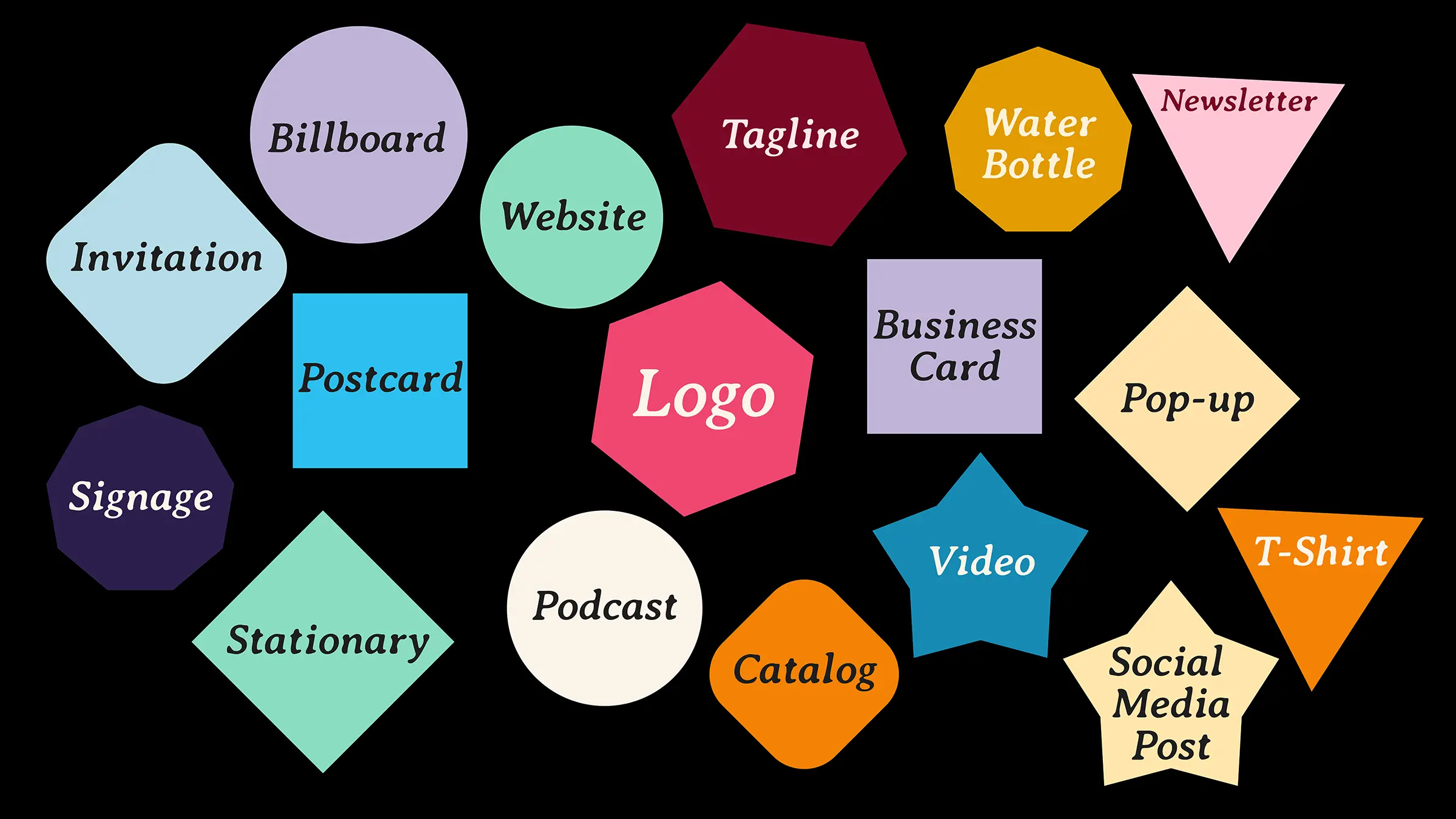
How MCDF Works
We designed MCDF to help movements turn intention into shared action by building communication systems that are clear, emotionally engaging, and easy to carry forward. Rather than focusing on one-off pieces, it emphasizes clarity, repetition, and participation, helping teams create stories, symbols, and tools that people can recognize at a glance, repeat consistently, and adapt across digital, physical, and live settings. By treating communication as a system instead of a set of outputs, MCDF helps movements grow while staying accessible, inclusive, and true to their values.

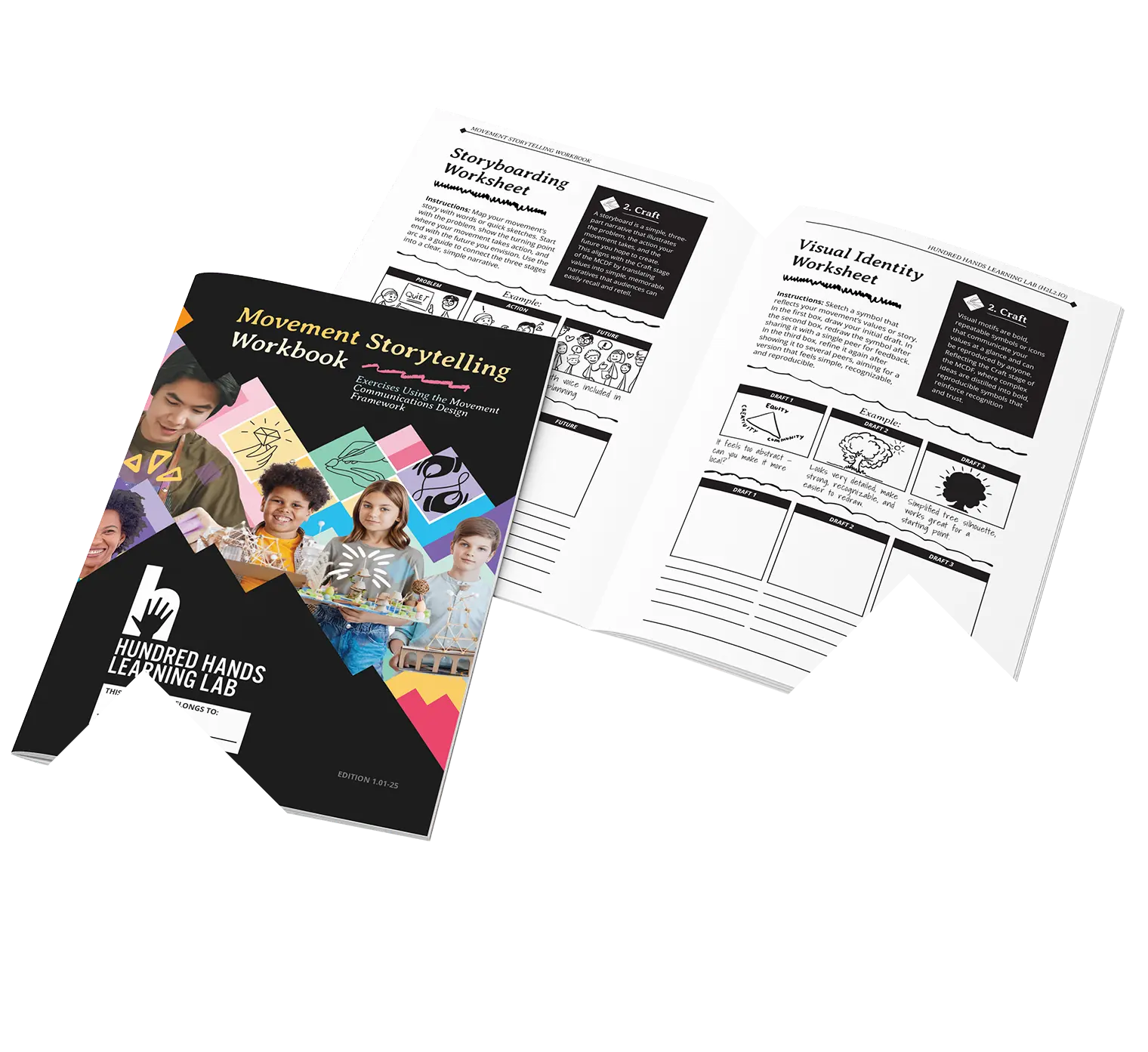

Movement Storytelling Workbook
Movement Storytelling Lab
The Movement Storytelling Workbook is a practical, hands-on introduction to the Movement Communications Design Framework, designed for educators, organizers, and mission-driven teams. It offers prompts, exercises, and examples to help turn values into narratives, visuals, and shared signals. The workbook is open source and will always remain so, allowing anyone to use, adapt, and share it as a living resource for collaborative learning.
The Thinking Behind the MCDF
Design Communications Movements
The Movement Communications Design Framework (MCDF) grew out of a need we kept hearing from mission-driven partners: “How do we communicate our values in ways people can see, trust, and carry forward?”
We learned from pioneers like Stanford d.school’s Design Thinking and IDEO’s Human-Centered Design, adapting their iterative, participatory spirit. But while those frameworks focused on innovation or product fit, MCDF focuses on movements, where clarity, dignity, and repeatability matter more than sales metrics.
The framework also draws from neuroscience and social psychology: people remember images longer than words, trust signals they can easily repeat, and feel belonging when they recognize themselves in a story. These insights help us design communications that don’t just inform, they mobilize.
We also looked back. From the Suffragettes’ purple white green banners, to the “I AM A MAN” placards, to ACT UP’s Silence = Death poster, movements have always used design to distill complex struggles into simple, reproducible symbols. Their lessons run through MCDF’s five stages: Illuminate, Craft, Engage, Foster, and Sustain.
What makes MCDF distinct is its scope. It does not try to replace organizing or governance work. Instead, it focuses on designing communication systems that make movements visible, shareable, and durable across time and context.
The Movement Communications Design Framework (MCDF) grew out of a need we kept hearing from mission-driven partners: “How do we communicate our values in ways people can see, trust, and carry forward?”
We learned from pioneers like Stanford d.school’s Design Thinking and IDEO’s Human-Centered Design, adapting their iterative, participatory spirit. But while those frameworks focused on innovation or product fit, MCDF focuses on movements, where clarity, dignity, and repeatability matter more than sales metrics.
The framework also draws from neuroscience and social psychology: people remember images longer than words, trust signals they can easily repeat, and feel belonging when they recognize themselves in a story. These insights help us design communications that don’t just inform, they mobilize.
We also looked back. From the Suffragettes’ purple white green banners, to the “I AM A MAN” placards, to ACT UP’s Silence = Death poster, movements have always used design to distill complex struggles into simple, reproducible symbols. Their lessons run through MCDF’s five stages: Illuminate, Craft, Engage, Foster, and Sustain.
What makes MCDF distinct is its scope. It does not try to replace organizing or governance work. Instead, it focuses on designing communication systems that make movements visible, shareable, and durable across time and context.
Methodology
Here are some ways to bring the Movement Storytelling Lab to you!
Online Course
COMING IN 2026
Join the waitlist for the Movement
Storytelling Lab Online Course
Host a
Storytelling Lab
Contact us to conduct a Movement
Storytelling Lab with your team
